.png)

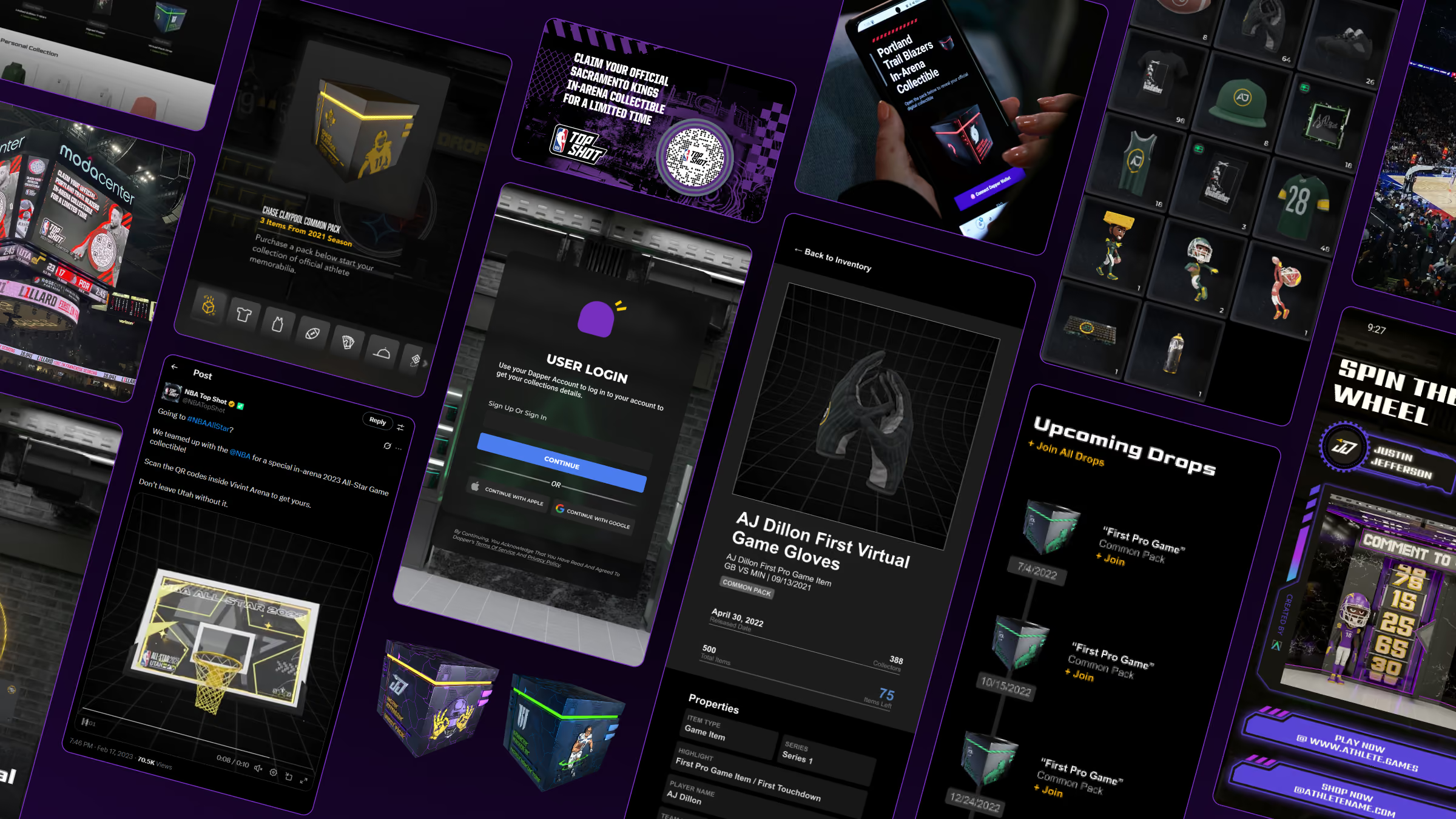
Notice: The nature of this work is confidential, I won't be able to show any project visuals for the time being. However, I can provide a description of the work I have done.
Athlete Studio is a platform focused on helping professional athletes build and manage their digital presence, products, and brand experiences.
When Athlete Studio joined Dapper Labs, the team began exploring how its existing athlete services could evolve into a more structured digital platform.
The Athlete CMS was an early-stage product concept developed during Athlete Studio's time within Dapper Labs.
The goal was to create a centralized system for managing athlete websites, products, content, design requests, and collaboration between athletes and internal teams.
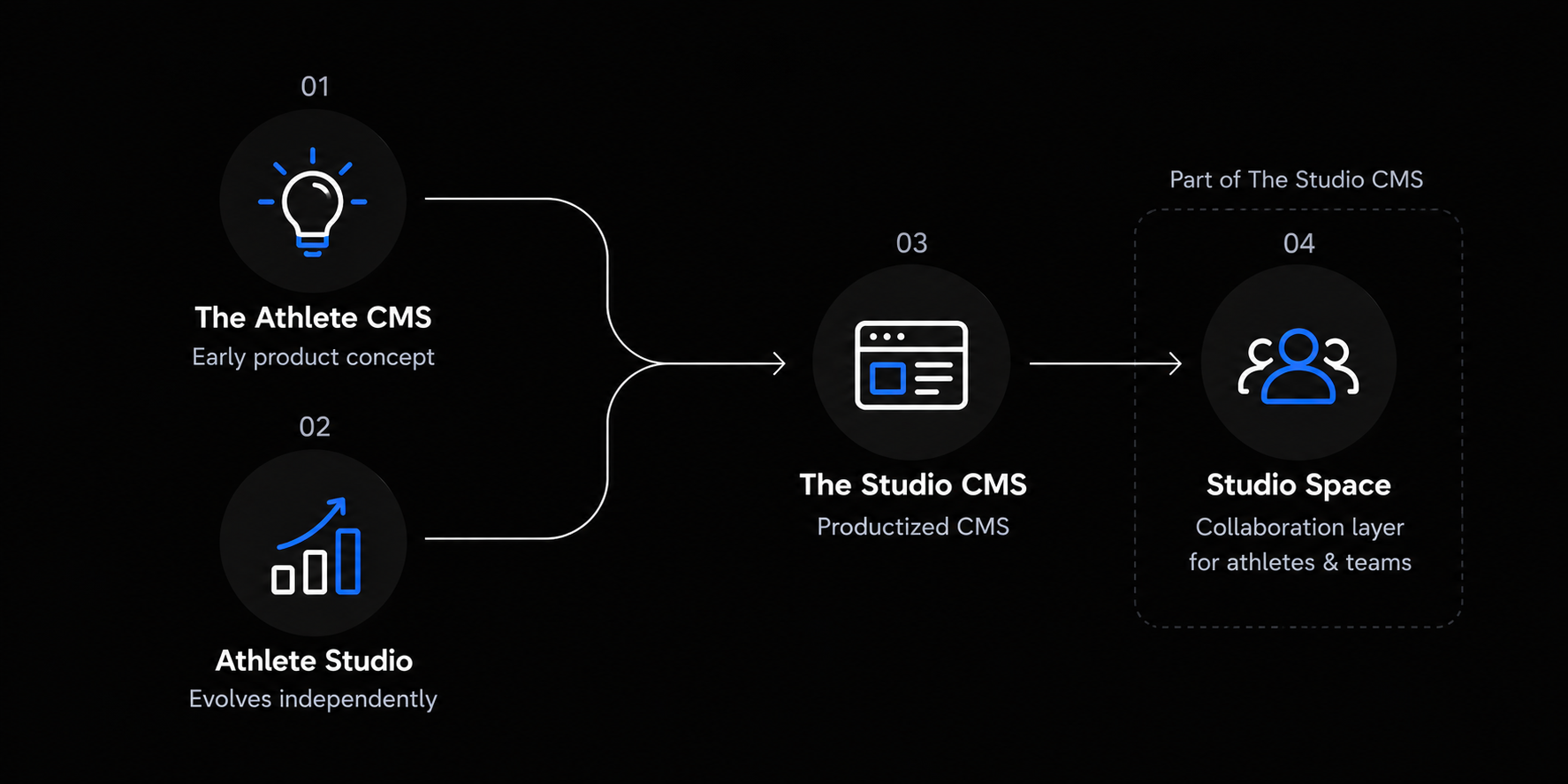
The project remained in the concept and product exploration stage during this period. After Athlete Studio later separated from Dapper Labs, the team continued developing the ideas and workflows explored in this project, eventually evolving them into The Studio CMS and its Studio Space collaboration features.
I worked as a Product Designer across the product design process, from workflow mapping and information architecture to UI, design systems, interactive prototypes, and product demos.
I collaborated closely with product, engineering, design, and Athlete Studio teams to translate complex operational workflows into a scalable CMS concept.
The Problem
How do you turn a complex, people-driven process into a product?
A single athlete request could involve multiple teams:
Athlete → Client Team → Design Team → Product Team → Engineering Team → Marketing Team → Athlete
As the business expanded, managing these interactions through disconnected processes became increasingly difficult.
The opportunity was to create a shared system where teams could manage work, content, products, and feedback in one place.
Understanding the Users
Designing for multiple roles
The platform needed to support different users with different goals.
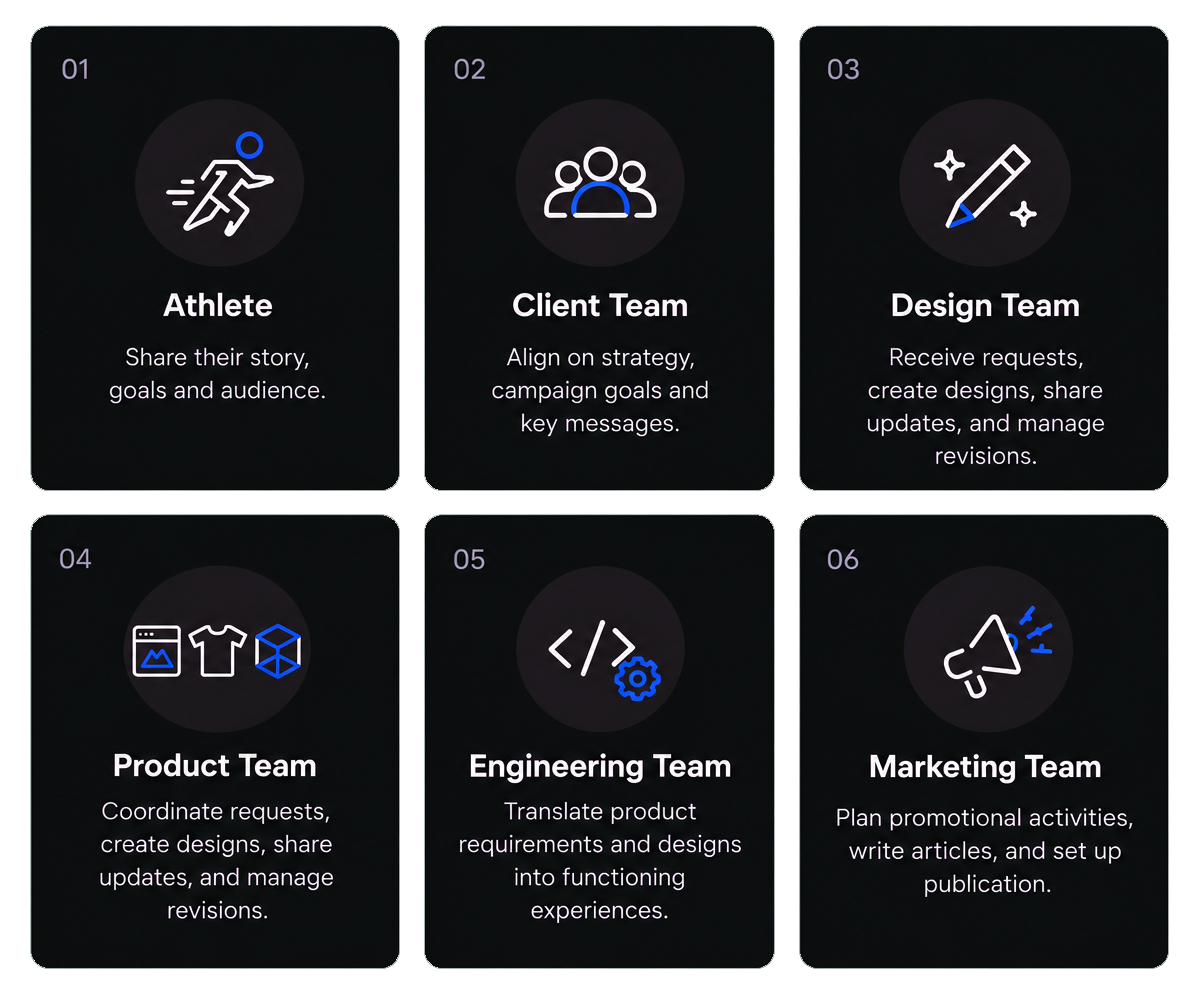
I mapped these relationships and translated them into a common product structure.
Mapping the Workflow
Designing around what users need to accomplish
The workflow became the foundation for the product architecture.
I mapped the different users, requests, and stages involved in the workflow.
A typical request could be structured as:
Request → Design → Review → Feedback → Revision → Approval → Production
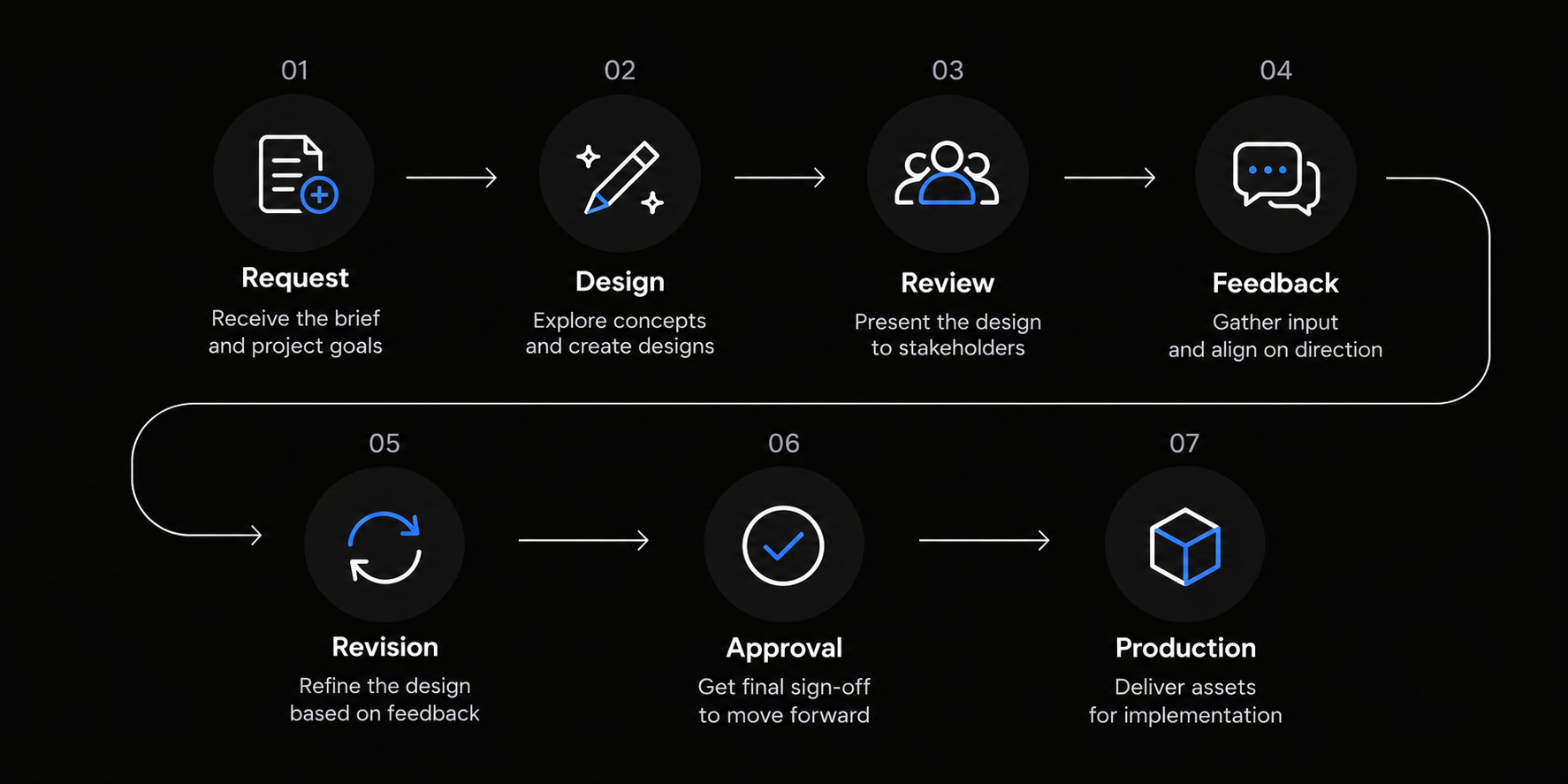
This helped shift the experience from a collection of internal processes into a predictable product journey.
Information Architecture
Creating a common mental model
I then translated these workflows into an information architecture organized around clear objects such as:
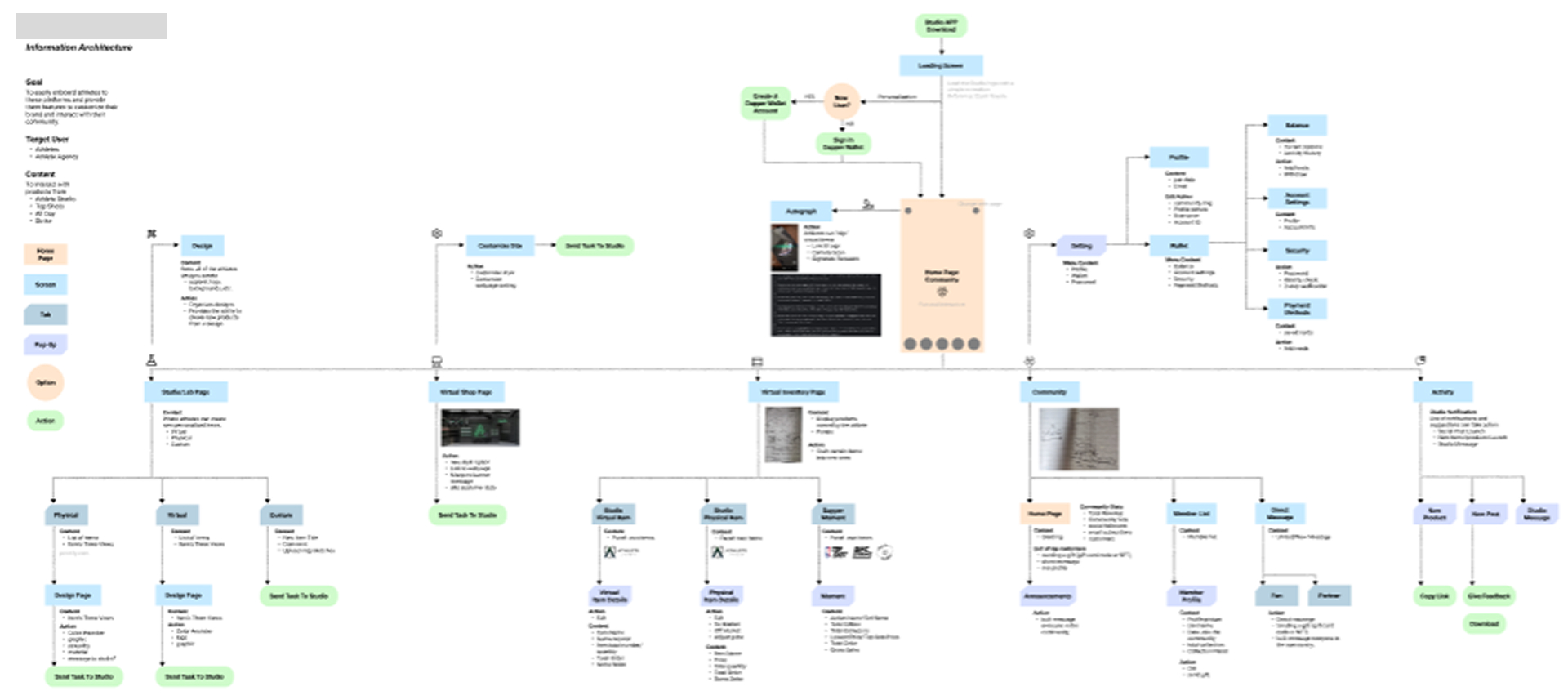
This moved collaboration from a largely people-driven process toward a more structured product experience.
Designing the Interface
Making complexity feel manageable
Once the workflows were defined, I translated them into a scalable UI system.
I focused on:

The goal was not to hide complexity.
It was to organize complexity so users could navigate it confidently.
Prototyping
Making the concept tangible
Because the project was still in the concept stage, interactive prototypes played an important role in communicating the product vision.
The prototypes helped the team align on:
How the workflow works → What users see → What happens next
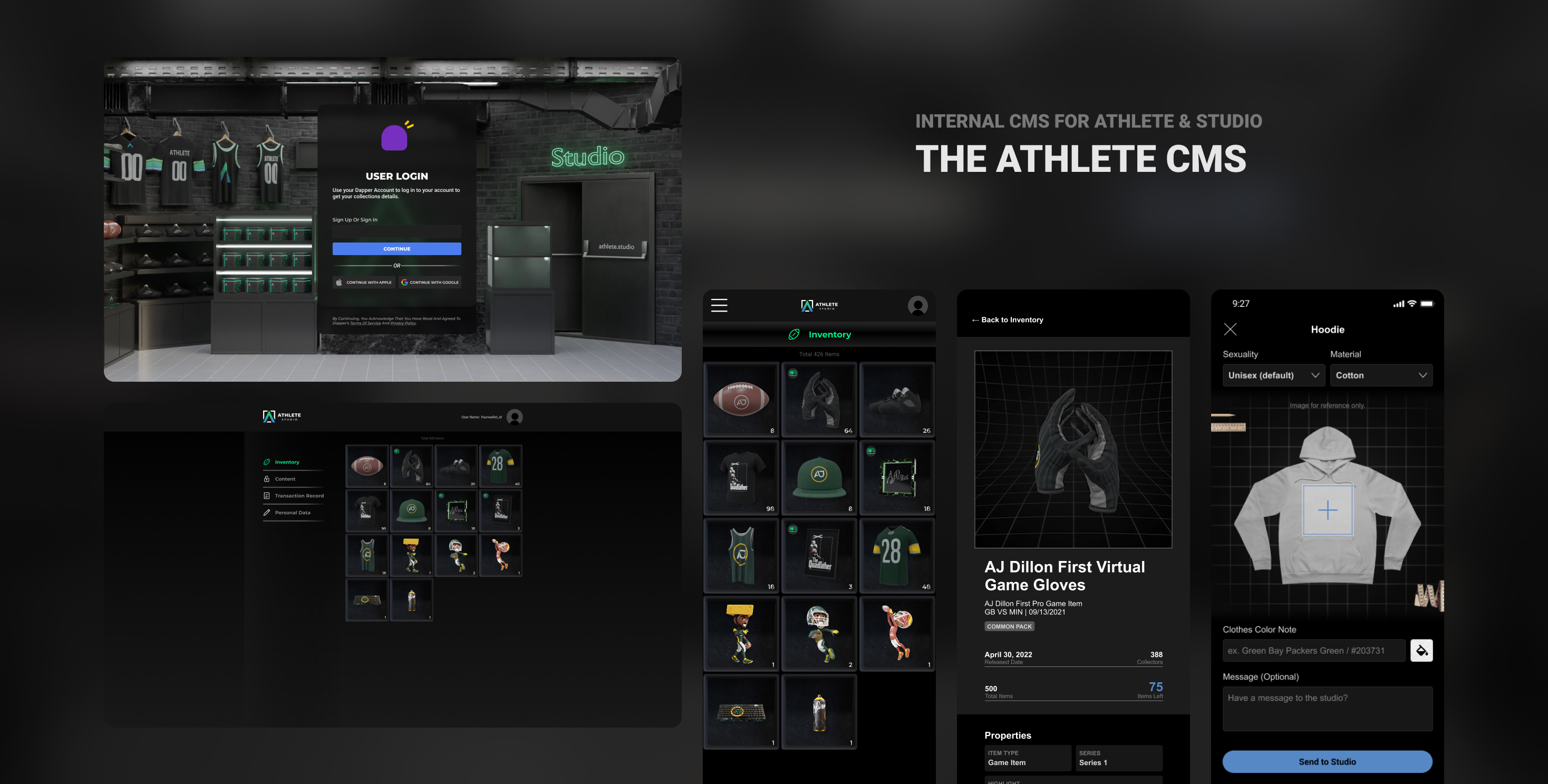

These prototypes helped turn an abstract CMS concept into something the team could experience and discuss.
Early Product Foundation
Continuing the product beyond Dapper Labs
The Athlete CMS explored the foundation for a more centralized athlete platform during the Dapper Labs phase.
After Athlete Studio separated from Dapper Labs, the team continued evolving the product direction based on the workflows and ideas explored in the original concept.
The product eventually became the Studio CMS's Studio Space Section, a dedicated space designed to help athletes and internal teams communicate, collaborate, and manage work together.
The Studio CMS represents the longer-term product evolution of Athlete Studio's internal platform, which I continued to design and refine across multiple phases from 2020 through 2025.

Impact
01 //
Although The Athlete CMS remained a concept during my time on the project, it established a structured product direction for how Athlete Studio could manage athletes, products, content, and team workflows in one system.
02 //
The work contributed:
03 //
The later evolution into The Studio CMS and Studio Space demonstrates how the original product direction continued to develop beyond the Dapper Labs phase.